

The menopause education we got was pretty pathetic. At some point your periods would get irregular, you’d have hot flashes, and then your periods would stop. Welcome to menopause. That was about the extent of it.
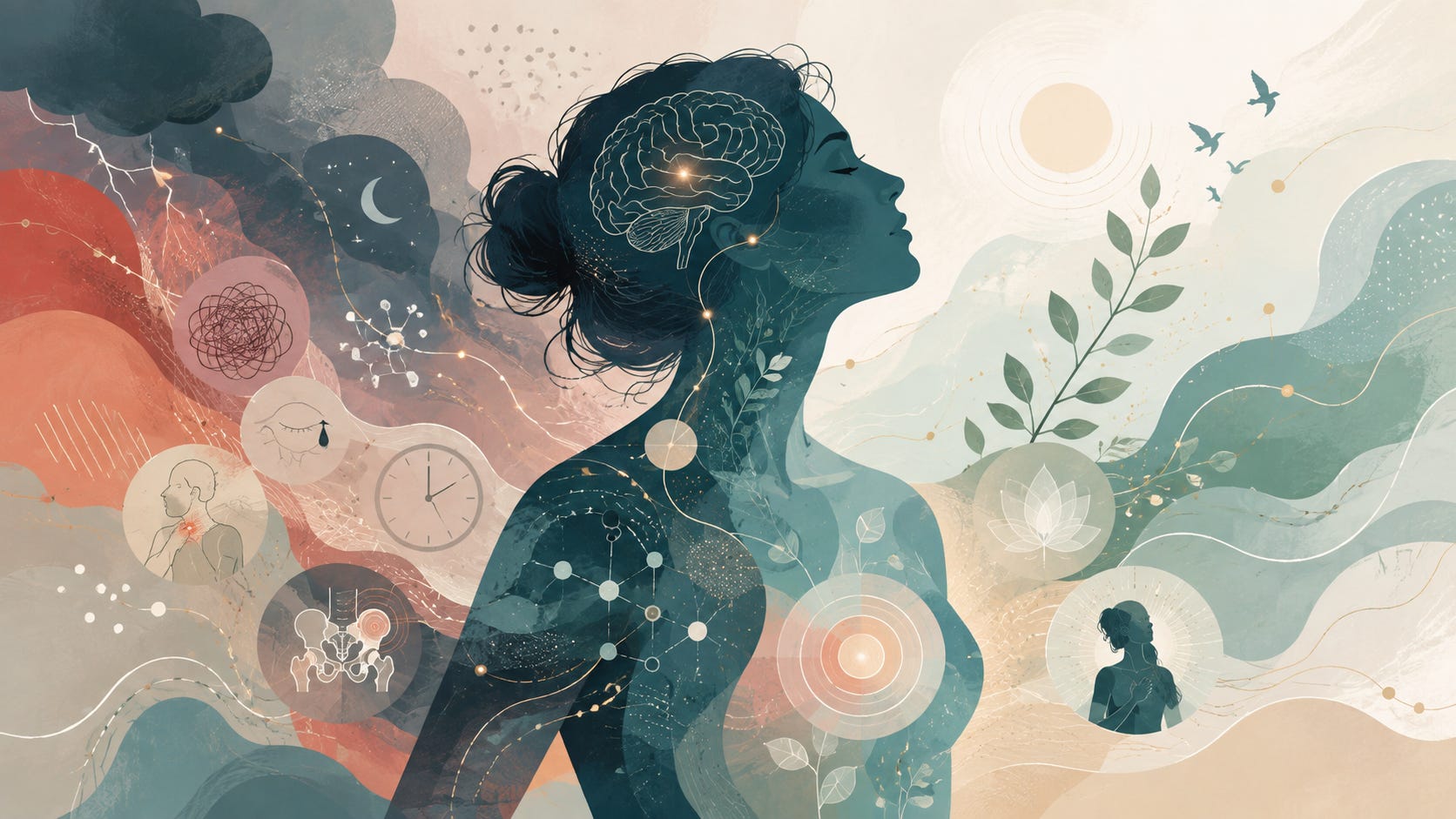
Next thing you know you hit your late 30s or 40s and start waking up at 3 a.m. for no apparent reason, your patience disappears, the jeans that fit at breakfast feel like a tourniquet by dinner, your shoulder hurts even though you don’t remember injuring it, you forget a word you’ve used approximately 47,000 times, you feel anxious when there is nothing specific to be anxious about, and that glass of wine you’ve enjoyed for years suddenly makes you feel like garbage.
And naturally, you think, wow, getting older sucks. But you don’t necessarily think perimenopause. At least I didn’t.
I was in nursing school, studying the human body, while my own body was waving giant red flags at me, and perimenopause never crossed my mind.
I had plenty of explanations. I was working full time, going to nursing school, commuting an hour each way to clinicals, homeschooling my kids, taking care of horses, a household, and the endless list of things women somehow become responsible for.
Of course I was tired. Of course I was stressed.
Those explanations weren’t wrong, but they were incomplete.
And I think this is why so many women get stuck. We have a perfectly reasonable explanation for each individual symptom, so we never zoom out far enough to see the whole picture.
The sleep problem gets blamed on stress. The weight gain gets blamed on aging. The mood changes get blamed on our workload. The sore joints get blamed on the mattress. The brain fog gets laughed off because apparently losing your train of thought halfway through a sentence is a hilarious rite of passage after 40, along with peeing your pants when you sneeze or laugh.
Meanwhile, nobody is asking one of the most useful questions:
Did a bunch of this start changing around the same time?
Perimenopause is bigger than your period.
Part of the problem is the way we’ve talked about female hormones for decades. Estrogen and progesterone got shoved into the reproductive-health box as though their only jobs involved periods, pregnancy, and babies. Your body did not get that memo.


