


If you worked through Normal Is Not Optimal, you probably circled a few markers that technically fell inside the reference range but were still nowhere near where you would want them to be. That short list became your agenda. The next question is the one most women are left with: what do I actually do with this information?
This is where we start connecting what shows up on paper with what is happening in your everyday life. Your fasting insulin does not exist in isolation. Neither does your cortisol rhythm, thyroid function, blood sugar, sleep, energy, or inflammation. All of those systems respond to what your days look like. When you eat matters. How you eat matters. How much you sleep matters. Whether you move matters. How much stress your body is carrying matters.
That does not mean every lab value is controlled by lifestyle. It does mean your daily patterns shape far more of your physiology than most women are ever taught.
And this is where I want to take some of the blame off your shoulders.
If you have tried routine after routine and none of them lasted, that does not automatically mean you lacked discipline. More often, the plan did not fit your life.
The 5 a.m. routine was built for someone who goes to bed at nine. The meal timing assumed you were not feeding three other people first. The workout plan assumed you slept through the night. The evening routine assumed nobody needed anything from you after dinner.
Then real life happened and the routine fell apart.
That is not a character flaw, it’s a design problem. And design problems are far more useful than discipline problems, because design gives you something specific to work with.
The other piece women often miss is that habits do not sit alone. They sit inside a loop.
When you sleep poorly your cortisol runs higher the next day, which makes blood sugar harder to regulate. You feel more tired and hungry, your cravings increase, you might reach for caffeine or a candy bar. Dinner then gets pushed later. And when you finally have a minute to yourself at night, you stay up scrolling to reward yourself for a long day done. Before you know it, it’s late and when you do go to bed, you don’t sleep well. Then the whole thing starts again.
This is why willpower keeps losing. You are trying to fight one behavior when the behavior is being reinforced by everything around it.
The goal is not to fix the entire loop at once. The goal is to find your leverage point and start there.
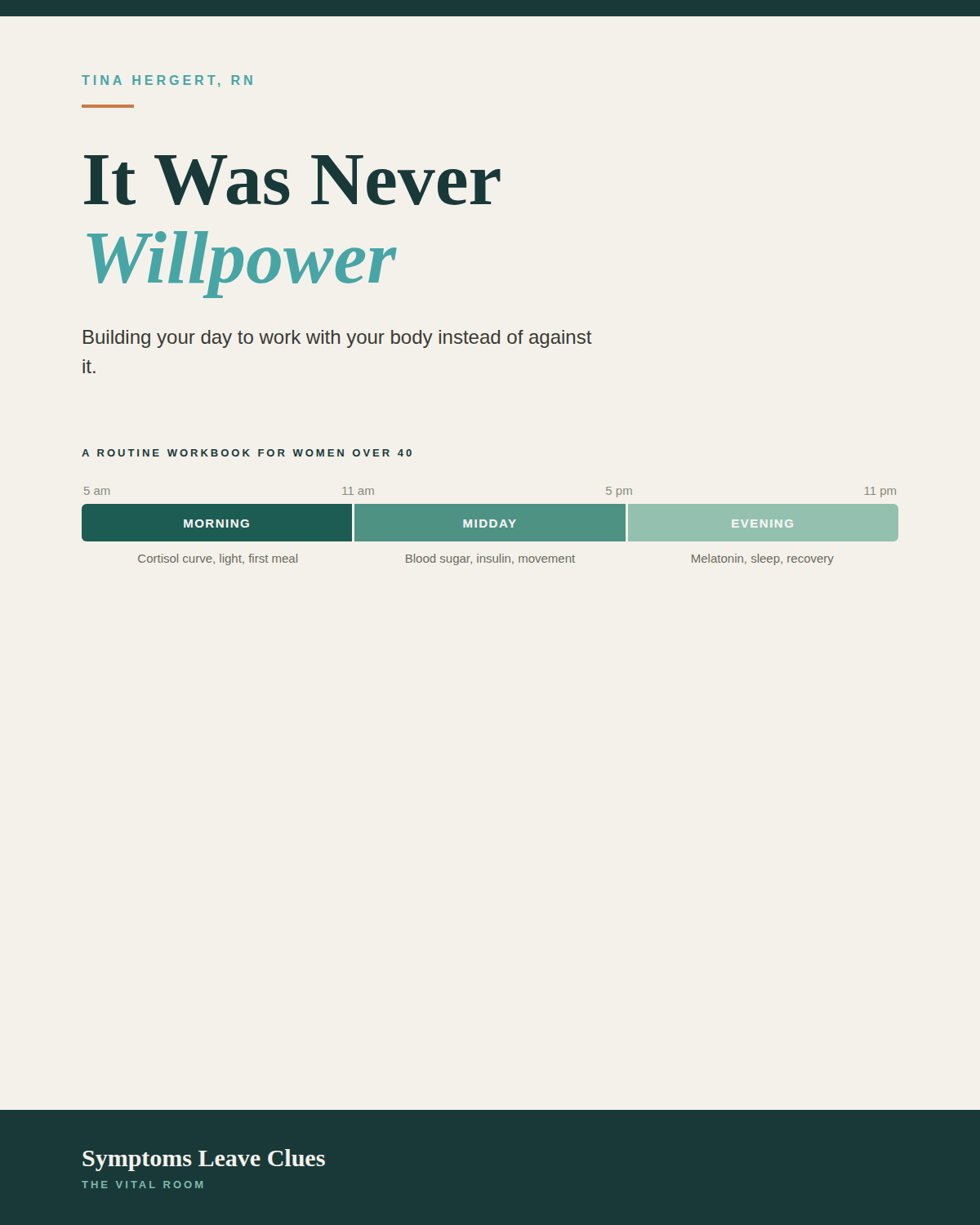
That is exactly what I built It Was Never Willpower to help you do. The workbook is organized around three parts of the day, morning, midday, and evening, and shows how each one supports different systems underneath your symptoms.
Upgrade to the Vital Room to continue reading and access the workbook.